
Microwave Turntable Not Rotating? Causes and Quick Checks
Nearly always debris in the roller ring, a worn coupler or the turntable motor. Three checks you can do safely, and why leaving it matters more than you would think.
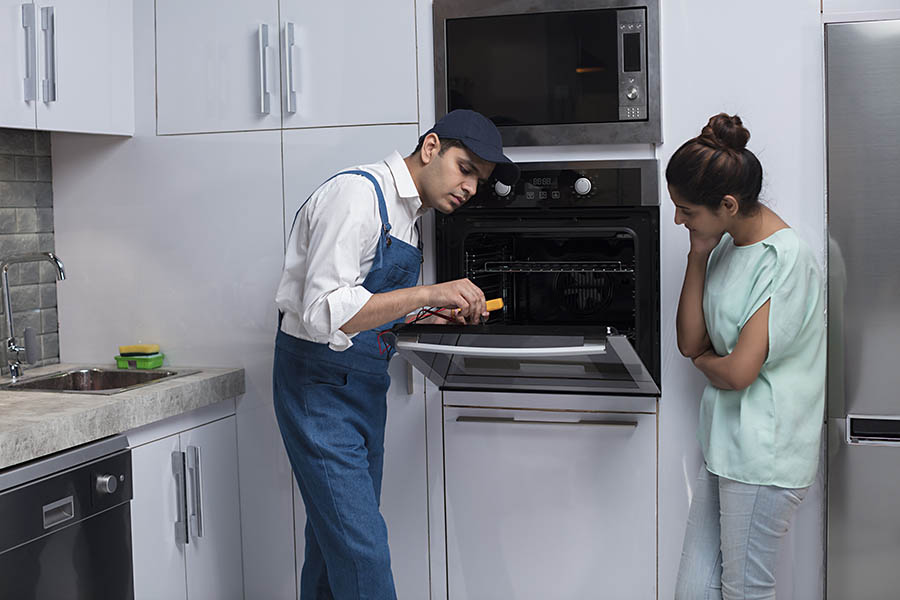
Quick answer: a turntable that has stopped rotating is nearly always debris in the roller ring, a worn plastic coupler that drives the plate, or a failed turntable motor. Check the first two yourself in a couple of minutes. It is one of the smaller microwave repairs, and the oven usually still heats while it is broken, which is exactly why people ignore it.
Send a photo of the microwave and its model sticker. The price is agreed before any work starts.
Safety first: unplug the oven before you lift out the plate or touch the coupler. Never remove the outer casing or base to reach the motor: the high-voltage capacitor can hold a lethal charge long after the oven is unplugged.
Check these before calling anyone
1. The roller ring and the cavity floor
Lift out the glass plate and the ring it sits on. Food debris, a hardened splash of sauce or a crumb wedged under a wheel is enough to stop the plate. Wash the ring, wipe the cavity floor, and check every wheel spins freely.
2. The coupler
In the centre of the cavity floor is a small plastic hub, usually a three-pointed piece, that the glass plate sits on. It is a wear part. If the splines inside have rounded off, the motor turns and the plate does not.
Lift the plate off and turn the coupler by hand. If it spins freely with no resistance but the plate never moves when the oven runs, the coupler is worn or has slipped off the motor shaft.
3. The plate itself
Make sure it is seated properly on the coupler. A plate sitting slightly off-centre can catch the cavity wall and stop.
If those are fine, it is the motor
The turntable motor sits beneath the cavity floor. It is a small component and replacing it is routine, but it is reached from outside the cavity, which is a job for a technician. The symptom is straightforward: coupler and ring are clean and undamaged, but nothing turns when the oven runs.
Occasionally the control board is not sending power to the motor. A technician tests which before replacing anything.
Does it matter if I just leave it?
The oven will still heat. But microwave energy does not fill a cavity evenly; there are hot spots and cold spots, and rotation is what averages them out. Without it you get food that is scalding at the edges and cold in the middle.
That is more than an inconvenience when reheating leftovers, because uneven heating means parts of the food may not reach a safe temperature. Stirring halfway and turning the dish by hand helps in the short term, but it is a workaround, not a fix.
Turning, but noisy or changing direction
A grinding or scraping sound while the plate turns is usually the roller ring (a cracked wheel or a flat spot) or debris. A rhythmic clicking is often the coupler slipping. Neither is urgent, but both get worse if left.
A plate that turns clockwise one time and anticlockwise the next is normal on many ovens. The small motor used in many microwaves can start in either direction, so it is not a fault.
When to call a technician: if the ring, coupler and plate are all fine and the plate still does not turn, or if the turntable stops at the same time as the oven stops heating or the display misbehaves, which points beyond the motor. Have the model number to hand (on a sticker at the back or inside the door frame) so the right coupler or motor can be brought where possible. You can book a microwave repair in Kolkata.
Is it worth repairing?
Almost always. The coupler and motor are small parts and widely available for the common brands, including Bajaj and Godrej microwaves. Unless the oven has other serious problems, such as a rusted cavity or a damaged door, a non-rotating turntable is not a reason to replace it. See microwave repair or replacement for the bigger picture.
There is a visit charge for the inspection, the part and labour are quoted once the cause is found, and the price is agreed before any work starts. We are an independent service, not connected to any manufacturer.
Preventing it
- Take the glass plate and roller ring out and wash them properly every few weeks. Most turntable faults start as trapped debris.
- Do not overload the plate. Heavy dishes wear the coupler and motor faster.
- Seat the plate squarely on the coupler after cleaning. A plate put back crooked is a common cause of the “it stopped again” call.
Frequently asked questions
Why has my microwave turntable stopped rotating?
Most often debris in the roller ring, a worn plastic coupler in the centre of the cavity floor, or a failed turntable motor. Occasionally the control board is not sending power to the motor. Unplug the oven and check the ring, coupler and plate seating first, because those are safe to check yourself.
Can I use a microwave if the turntable does not turn?
It will still heat, but microwave energy is uneven without rotation, so food ends up scalding at the edges and cold in the middle, and parts may not reach a safe temperature. Stirring and turning the dish by hand is a workaround until it is fixed, not a long-term answer.
Is a microwave turntable repair a big job?
No, it is one of the smaller microwave repairs. The coupler and motor are small parts that are widely available for the common brands. There is a visit charge for the inspection, the part and labour are quoted once the cause is found, and the price is agreed before work starts.
Why does my microwave turntable make a grinding or clicking noise?
Grinding or scraping is usually a cracked or flat-spotted roller ring wheel, or debris under the plate. A rhythmic clicking is often the coupler slipping on worn splines. Neither is urgent, but both get worse if left, so clean the ring and check the coupler first.
Why does my microwave turntable turn in different directions?
On many ovens this is normal. The small motor that drives the turntable can start in either direction, so the plate may turn clockwise one time and anticlockwise the next. It only matters if the plate stops, jerks or makes a grinding noise.
Book a geyser or microwave repair
Tell us the appliance, brand and the problem, and we will arrange a technician visit in your area of Kolkata.
+91 82740 66348More repair guides

Geyser Not Turning On? 7 Checks Before You Call
No light, no heat, no sign of life? Seven safe checks to rule out a switch, MCB, setting or supply problem before you book…

Geyser Safety: Shock, Burning Smell, Water Too Hot
The geyser warning signs that mean switch off at the mains now, what each one usually points to, and the habits that keep a…

How Long Does a Geyser Last – Repair or Replace?
Why no one can give an honest single number for geyser lifespan, what really decides how long the tank lasts, and five questions that…