
Geyser Installation – What’s Included & What Affects the Cost
What a complete geyser installation should include, from wall mounting to the safety valve and earthing, and the factors that make one job cost more than another.
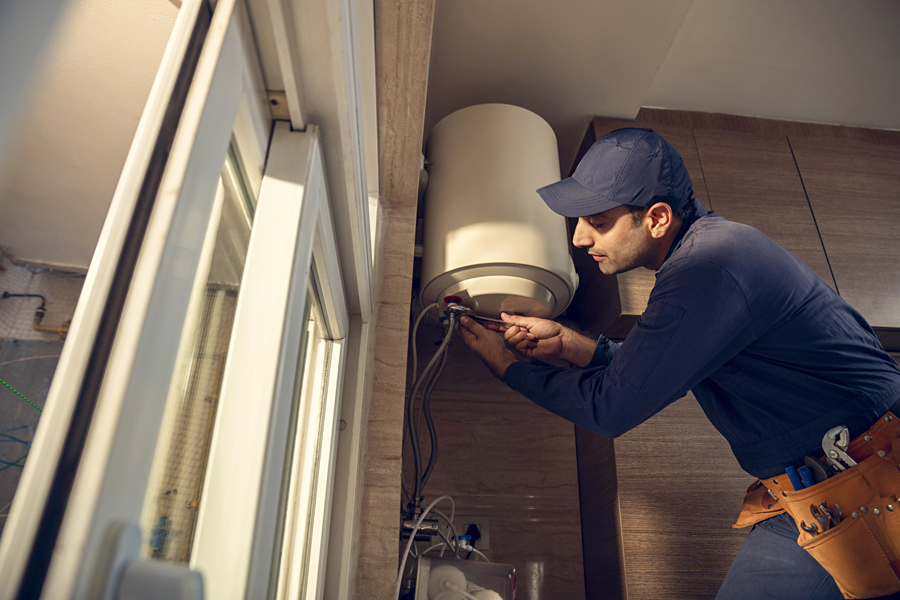
Quick answer: a proper geyser installation covers secure wall mounting, the inlet and outlet connections, the safety valve on the cold inlet, a correctly rated and earthed electrical supply, and a test run with the tank full. What moves the cost is the wall, how far the existing water and power points are from where the geyser will hang, whether an old unit has to come down first, and how much new pipe or wiring the job needs.
Send a photo of the geyser and its model sticker. The price is agreed before any work starts.
Why two installation quotes are rarely for the same job
“Installation” can mean anything from hanging a geyser on two existing pipe points to running new pipework, fixing missing earthing and replacing a scorched socket. Both get called installation, and that is why quotes vary so much.
The useful question is not “how much to install a geyser?” but “what exactly will be done, and with which fittings?” Once you know what a complete job includes, you can see what each quote leaves out.
What a complete installation includes
- Choosing the position. Close enough to the shower or tap that you are not waiting for hot water, clear of direct splashing, and with enough room around the unit for someone to service it later.
- Mounting. Brackets or hooks fixed with fasteners that suit the wall. A full 25-litre tank carries 25 kg of water before you count the tank itself, so the fixing matters.
- Water connections. The cold inlet and hot outlet connected with flexible connection pipes or fixed pipework, sealed, and checked for drips.
- The safety valve. The pressure-relief or multi-function valve fitted on the cold inlet, the right way round, with its outlet left clear. It is a safety device, not an optional extra.
- Electrical connection. A supply and switch suited to the geyser’s load, and a sound earth connection at the point.
- Filling before switching on. The tank is filled and air bled out through a hot tap before any power goes on. Switching on an empty tank can burn out a new element almost immediately.
- Test run. Heating confirmed, the thermostat set, joints re-checked once the water is hot, and you are shown how to switch the unit off completely.
What affects the cost
| Factor | Why it changes the job |
|---|---|
| The wall | Solid brick takes a fixing well. Tiles need careful drilling to avoid cracking. Thin partitions or hollow blocks may need a different fixing or a different spot. |
| Distance to existing points | If the inlet, outlet and power point are already where the geyser will hang, it is a straightforward fit. Extending pipes or running a new electrical line adds material and time. |
| Height and position | Above a door, in a loft, over a false ceiling or in a narrow gap takes longer and sometimes needs two people. |
| Removing an old geyser | Draining, disconnecting and taking down the old unit is a separate task, and corroded fittings slow it down. |
| Fittings needed | Some geysers come with connection pipes and a valve in the box; others do not. What is missing has to be supplied. |
| Wiring and earthing | If the bathroom point has no usable earth or the socket is undersized, fixing it is not optional, but it is extra work. |
| Building water pressure | Buildings with pressure pumps need a geyser rated for that pressure and a working safety valve, and sometimes extra fittings. |
None of these can be judged from a phone call. A photo of the wall, the existing pipe and power points, and the geyser’s box or model sticker usually tells a technician most of what they need to know. There is a visit charge for the inspection, and the full price is agreed before any work starts.
Storage and instant geysers install differently
A storage geyser (usually 10 to 25 litres) goes in the bathroom and the main concerns are wall strength, pipe routing and the safety valve. An instant geyser (typically 1 to 6 litres) is lighter and often sits under a kitchen sink or above a wash basin, but it usually runs a higher-wattage element, so the electrical point matters more than the wall.
If you have not bought yet, it is worth reading instant vs storage geysers for Kolkata flats and what size geyser you need before choosing a position.
What to check in Kolkata flats and older houses
- Flats on an overhead tank. Water pressure depends on the height between the tank and your bathroom. Top-floor flats often get weak flow, and a long outlet run makes it worse.
- High-rises with pressure pumps. Compare the pressure rating printed on the geyser or in its manual with your building’s supply. A working safety valve is essential here.
- Older houses. Thick brick walls take a fixing well, but older wiring may have no earth at the bathroom point, and old concealed pipes may be corroded inside.
- Hard water areas. The tank will need descaling every so often, so leave enough room around it for the technician to drain it and reach the element.
Safety first: never run a geyser without a working earth connection, never cap or block the outlet of the safety valve, and never switch a geyser on before the tank is full. If the MCB trips or you feel a tingle from the tap after a new installation, switch off at the mains and have it checked. Our guide to a geyser giving a shock or tripping the MCB explains why.
Manufacturer installation and your warranty
Many manufacturers arrange installation through their own service network, and some link part of the warranty to it. For example, at the time of writing Racold’s website states that the extra year of heating-element warranty on its CDR DLX range applies when the unit is installed by Racold’s service centre.
So read the warranty card before you book any installer, including us. If using the brand’s own installation keeps a benefit you want, use it. If not, or if you are refitting a Bajaj, Racold or any other geyser after a house move, or taking down an old unit, an independent installer is a normal choice. We are an independent service and not connected to any manufacturer.
Uninstallation and refitting
Moving flats, renovating a bathroom or replacing an old unit all need the geyser taken down safely: power isolated, the tank drained, the valve and pipes disconnected, and the open pipe points capped so they do not leak. Refitting an existing geyser in a new home is a normal installation, with one extra step. The safety valve, connection pipes and element should be inspected first, because a unit that has sat unused through a move is the one that leaks on its first day back in service.
When to call a technician: for any new installation, a refit after a move, or if an existing geyser drips at its joints, the safety valve discharges constantly, or the unit has moved on its brackets. Details of what we cover are on our geyser installation in Kolkata page.
After installation
A well-installed geyser still needs looking after. A service before each winter, covering descaling, safety valve and thermostat checks and an anode rod inspection, keeps the tank healthy for longer. Our guide on how often a geyser should be serviced covers what that involves.
Frequently asked questions
What is included in a geyser installation?
A complete job covers choosing the position, fixing the geyser securely to the wall, connecting the cold inlet and hot outlet, fitting the safety valve on the inlet, connecting a suitably rated and earthed electrical supply, filling the tank before switching on, and a test run to confirm heating and check every joint for leaks.
What affects the cost of installing a geyser?
Mainly the wall type, how far the existing water and power points are from where the geyser will hang, the height and access, whether an old geyser has to be removed first, which fittings are missing from the box, and whether the wiring or earthing at the point needs work. There is a visit charge for the inspection and the full price is agreed before work starts.
Can you install a geyser I bought online?
Yes. We install most brands of storage and instant geyser. Before booking, check the warranty card, because some manufacturers link part of the warranty to installation by their own service network. If you want to keep that benefit, use the brand's installation. Otherwise, send a photo of the wall, the pipe and power points and the model sticker for a quote.
Do I need a safety valve when installing a geyser?
Yes. The pressure-relief or multi-function valve on the cold inlet lets the tank release pressure if something goes wrong with the thermostat or the supply. It must be fitted the right way round and its outlet must never be capped or blocked. A small drip while the geyser heats can be normal, but constant discharge needs checking.
Do you remove the old geyser when installing a new one?
We can. Removal means isolating the power, draining the tank, disconnecting the valve and pipes and taking the unit down safely. It is a separate task from installing the new geyser, and corroded fittings on an old unit can make it take longer, so mention it when you ask for a quote.
Book a geyser or microwave repair
Tell us the appliance, brand and the problem, and we will arrange a technician visit in your area of Kolkata.
+91 82740 66348More repair guides
Microwave Repair – What Affects the Cost (by Fault)
Microwave repair costs explained by fault, from interlock switches and fuses to magnetrons and convection heaters, plus what makes the same repair cost more.
Racold vs Venus Geyser – Which Lasts Longer?
A fair look at Racold and Venus storage geysers: what each maker says about its tanks and warranties, and the three things that decide…

What Size Geyser Do You Need? (10, 15, 25 Litre)
10, 15 or 25 litres? How to size a geyser by how many people need hot water in the same hour, bucket or shower,…